
The AI Fluency Gap: Why Knowing Tools Isn’t Enough
AI fluency goes beyond using popular tools. Learn how judgment, verification, workflow design, and domain expertise create durable AI skills.
AI Use Is Not the Same as AI Fluency
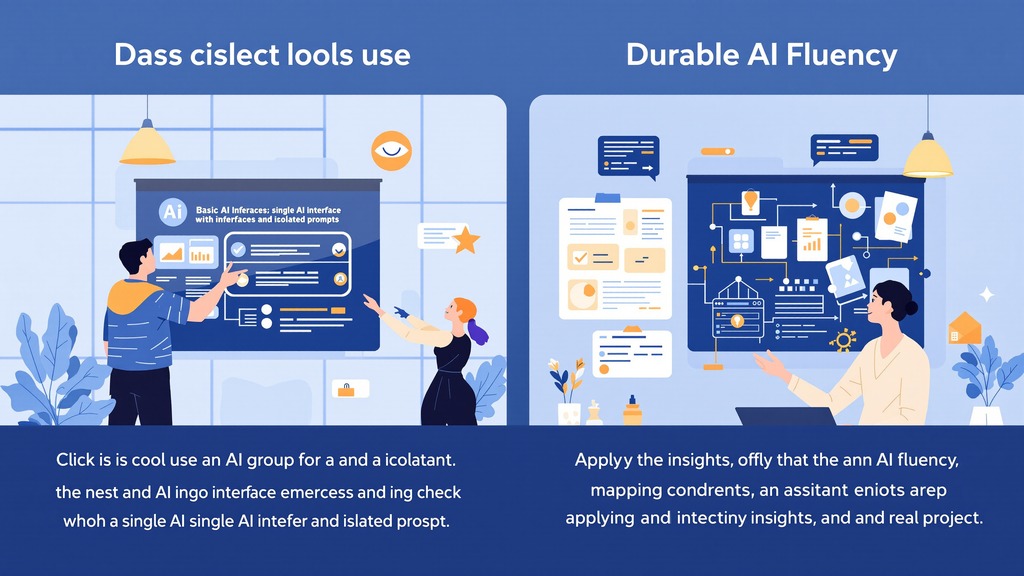
Many learners can open an AI assistant, write a basic prompt, and generate a useful answer. That is a valuable starting point, but it is not yet durable AI fluency. Occasional AI use often depends on familiar interfaces, simple tasks, and favorable results. When the tool changes, the request becomes ambiguous, or the output contains an error, the user may not know what to do next. This explains why digital literacy is increasingly expanding from knowing how to operate software to understanding how to work responsibly with intelligent systems.
AI fluency means transferring AI skills across tools, contexts, and levels of complexity. A fluent user can define a goal, provide relevant context, evaluate an answer, revise the workflow, and recognize when human expertise must take over. They understand that a polished response is not necessarily a correct one. For students, career switchers, and professionals, this difference matters because workplace learning is measured by outcomes: clearer analysis, faster iteration, better decisions, and dependable work. The real question is not, “Can you use an AI tool?” but, “Can you use AI thoughtfully when the situation changes?”
Four Capabilities That Define Durable AI Skills
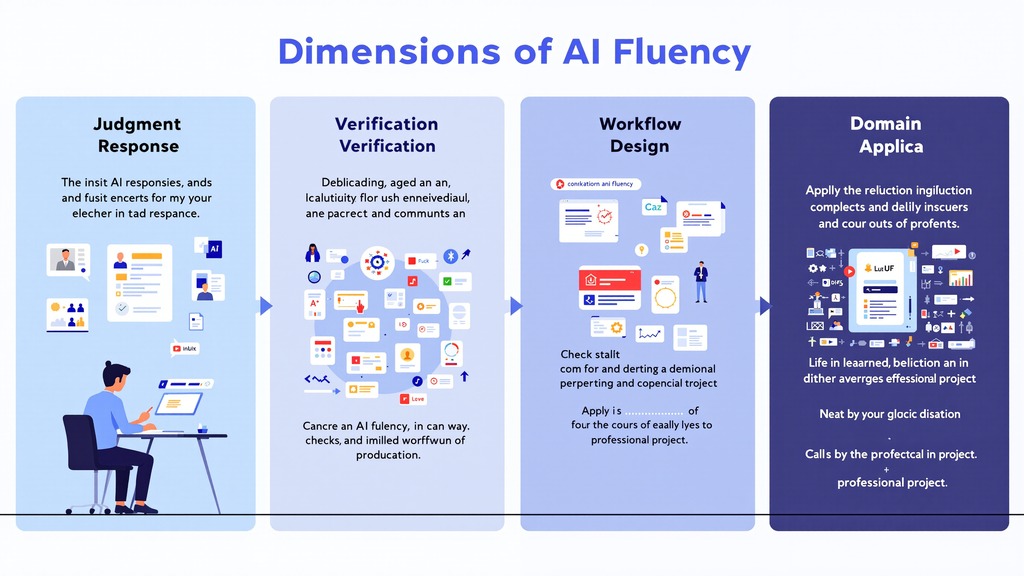
A practical model for assessing AI fluency starts with four capabilities. The first is judgment: selecting an appropriate task for AI, setting clear objectives, and identifying risks such as bias, privacy concerns, or unsupported claims. The second is verification: checking facts, comparing outputs, testing assumptions, and tracing important information to reliable sources. Fluent users do not accept confident language as proof. They know when an answer requires deeper review or subject-matter expertise.
The third capability is workflow design. Rather than treating AI as a magic answer box, learners divide work into steps, supply useful context, create feedback loops, and define quality criteria. The fourth is domain application: adapting AI skills to marketing, research, teaching, operations, coding, or another professional setting. These capabilities can be practiced through realistic exercises, not just tutorials. A learner might rewrite a campaign brief, critique the output against brand guidelines, ask the tutor to explain a weak assumption, and revise the process. That sequence reveals more about AI skills than a quiz on prompt terminology ever could.
How to Build and Measure AI Fluency
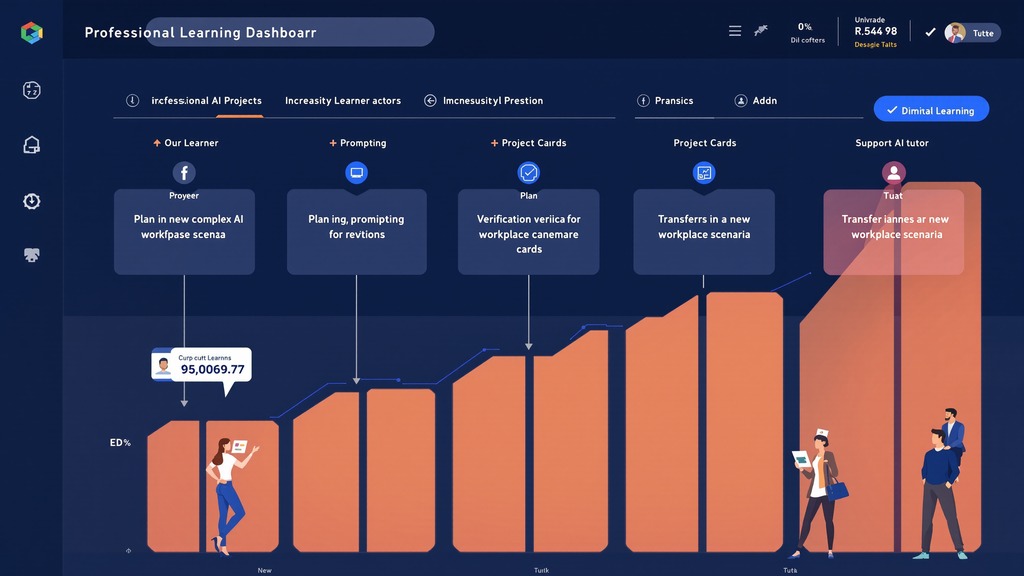
Building AI fluency requires progression, practice, and feedback. Start by defining a meaningful goal, such as improving research quality, reducing repetitive work, or communicating more clearly. Then practice a complete cycle: plan the task, interact with the model, inspect the output, verify important claims, and improve the workflow. Learners should repeat this cycle with different tools and scenarios so their ability is not tied to one interface. Adaptive learning can help by recommending lessons and exercises based on experience, goals, and available time.
Progress should be measured through evidence of transfer, not activity alone. Can a learner explain why one prompt produced a stronger result? Can they identify an AI-generated error, improve an unreliable process, and apply the same reasoning to a new domain? Employers and education providers can use projects, rubrics, reflections, and revision histories to answer those questions. The goal is not to memorize every new feature. It is to develop the confidence and discipline to learn changing tools while maintaining human accountability. That is how workplace learning becomes measurable capability rather than short-lived experimentation.